- Home
- Community Blog
- The Speed Bag Guide: How to Hang It, Hit It and Build Rhythm
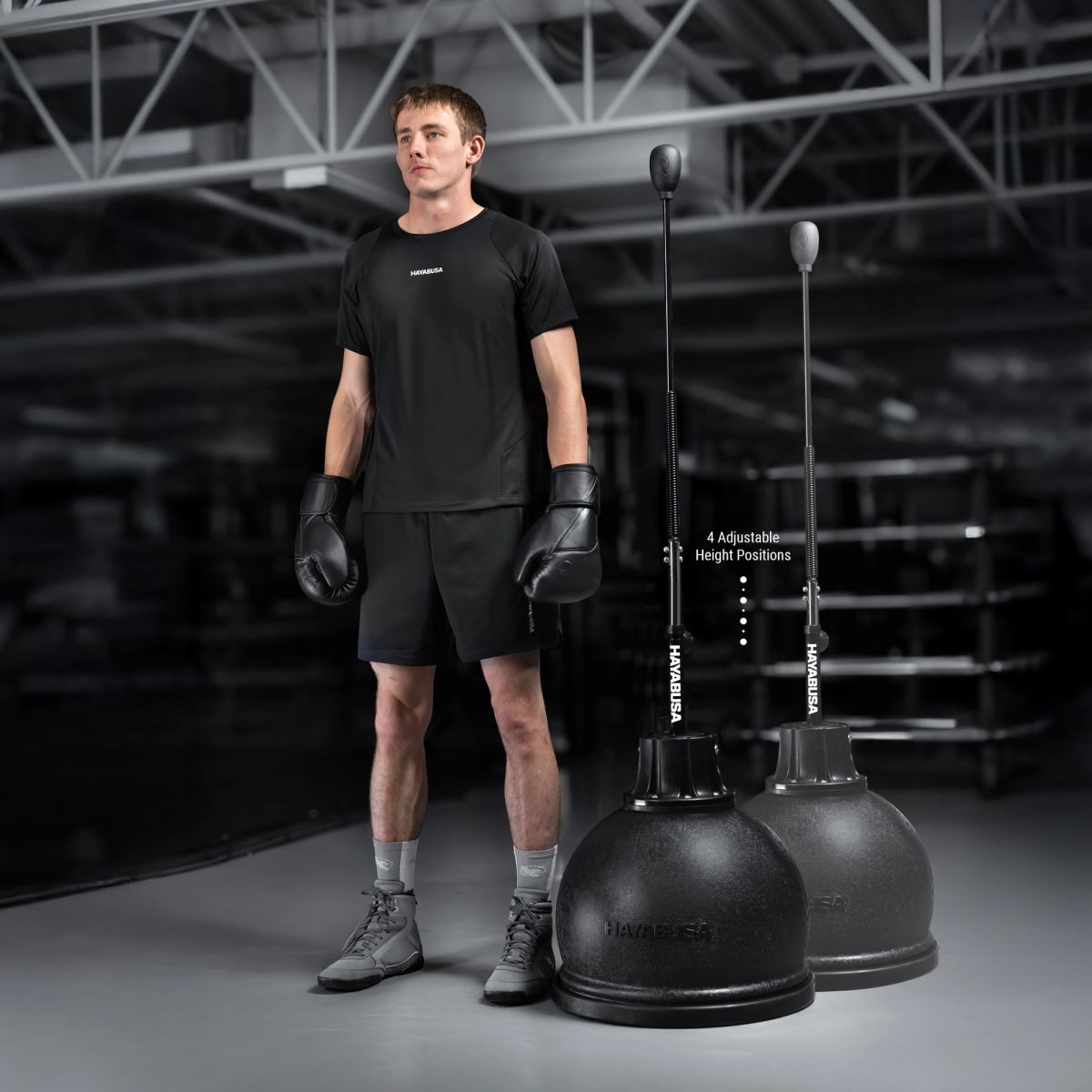
The Speed Bag Guide: How to Hang It, Hit It and Build Rhythm
A speed bag trains rhythm, timing and hand-eye coordination, not punching power. To hit one well, hang the bag so its widest point sits around mouth level, strike it with light, circular punches, and let it rebound three times between hits.
That three-beat bounce is the triplet rhythm, and once your hands find it, the speed bag becomes one of the most satisfying pieces of equipment in the gym. Getting there takes patience. Most beginners hit too hard, stand too far away and chase the bag instead of letting it come back to them.
This guide covers everything you need to go from flailing to flowing: what the speed bag actually builds, how to set one up, how to hit it, and a simple 3-round routine you can start today.
What a Speed Bag Trains
The speed bag is a coordination tool. It won’t make you hit harder, but it sharpens the skills that make every other part of your boxing cleaner.
- Rhythm and timing. The bag moves on a fixed beat. Staying on that beat teaches your hands to strike at the right moment, not just as fast as possible.
- Hand-eye coordination. Tracking a small, fast-moving target trains your eyes and hands to work together, which carries over to reading punches in sparring.
- Shoulder endurance. Keeping your hands up and working for 2–3 minutes builds the shoulder stamina that keeps your guard high in late rounds.
- Relaxed hands. You can’t muscle a speed bag. It rewards loose, efficient punches, a habit worth bringing to every round.

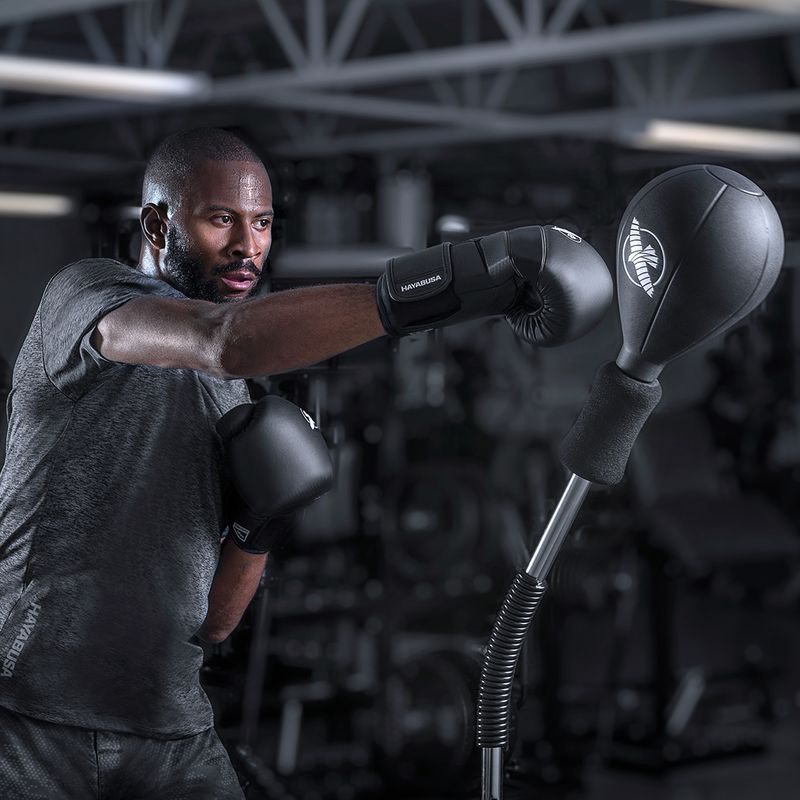
Speed Bag vs Double-End Bag vs Heavy Bag
Each bag in the gym has a different job. The speed bag is for rhythm, the double-end bag is for accuracy and head movement, and the heavy bag is for power.
| empty | Speed bag | Double-end bag | Heavy bag |
|---|---|---|---|
| Main skill | Rhythm, timing, hand speed | Accuracy, timing, defense | Power, conditioning, combinations |
| How it moves | Rebounds off a platform in a set beat | Snaps back unpredictably on two cords | Swings slowly, absorbs force |
| Hits back? | No | Yes, so you have to slip and move | No |
| Best for | Coordination and shoulder endurance | Reaction time and defensive habits | Building strength and stamina |
| Beginner-friendly | Takes a few sessions to click | Moderate | Yes |
| What to wear | Hand wraps or light bag gloves | Bag gloves | Bag gloves or 14–16 oz gloves |
If you’re choosing between the first two, our double-end bag training guide covers that bag in depth.
How to Set Up a Speed Bag
A badly set up speed bag is almost impossible to hit well. Get these four things right before your first round.
1. Platform height. Hang the bag so its widest point (the “belly”) sits level with your mouth or chin when you’re in your stance. Too high and your shoulders burn out in seconds; too low and you’ll drop your elbows. If several people share the bag, an adjustable platform saves a lot of guesswork.
2. A solid platform. The rebound board needs to be heavy and firmly mounted, ideally into wall studs or a ceiling joist. If the board vibrates or flexes, the rebound turns mushy and you’ll never feel a clean rhythm.
3. Bag size. Larger speed bags move slower and are easier to time, so start with a bigger bag (around 9 × 12 in). Smaller bags (5 × 7 or 6 × 9 in) are faster and better once your rhythm is consistent.
4. Swivel and inflation. A ball-bearing swivel gives a smoother, more even rebound than a basic hook. Inflate the bag firmly so it holds its shape, and check it hangs straight before you start.
How to Hit a Speed Bag
Forget everything you know about punching a heavy bag. On the speed bag, light and loose wins.
Stance. Stand square to the bag, close enough that your fists are a few inches from it with your elbows bent. Keep your hands up at chin height, elbows out to the sides, and your weight balanced on the balls of your feet.
Contact point. Hit the belly of the bag with the side or front of your fist using a small, circular motion, as if you’re rolling your fist forward. The punch comes from the shoulder and forearm, not a full extension.
The triplet rhythm. After each hit, the bag strikes the platform three times before it’s ready again: forward, back, forward. Count it out loud (hit, two, three; hit, two, three) until your hands find the beat on their own.
Build it in stages:
- Single hand. Hit with your lead hand only, catching the bag on every triplet, for 20–30 seconds. Then switch hands.
- Alternating hands. Hit once with one hand, let the triplet play out while that hand circles back, then hit with the other.
- Doubles. Hit each hand twice in a row before switching (left-left, right-right), still on the triplet.
- Speed it up. Once the triplet is steady, hit harder and faster so the bag rebounds only once between strikes. This is where the bag earns its name.
A 3-Round Speed Bag Routine for Beginners
Three 2-minute rounds with 1 minute of rest between them takes under 10 minutes. Add it to the end of a bag or pad session, or use it as a warm-up.
| Round | Time | Focus | What to do |
|---|---|---|---|
| 1 | 2 min | Find the rhythm | 30 s lead hand only, 30 s rear hand only, then 1 min alternating hands on the triplet |
| Rest | 1 min | empty | Shake out your shoulders |
| 2 | 2 min | Build control | Doubles (left-left, right-right) for the full round. If you lose the bag, stop, reset and restart slowly |
| Rest | 1 min | empty | empty |
| 3 | 2 min | Push the pace | 20 s steady alternating, 10 s fast burst; repeat 4 times |
Do this routine 2–3 times a week and most people feel the rhythm click within a few sessions. When round 3 feels easy, make the rounds 3 minutes long or switch to a smaller, faster bag.
Common Speed Bag Mistakes
Almost every speed bag problem comes from one of these five mistakes.
- Hitting too hard. A hard hit sends the bag out of rhythm and wild. Use just enough force to keep the triplet steady.
- Standing too far away. If you have to reach, your punches get long and late. Step in until your elbows stay bent.
- Chasing the bag. When you lose the rhythm, don’t swing at it. Stop the bag, reset and restart slowly.
- Dropping your hands. Let your hands sink between hits and you lose both the rhythm and the shoulder-endurance benefit. Keep them at chin height the whole round.
- Wrong platform height. If your shoulders burn out within 30 seconds or you’re punching downward, adjust the bag before blaming your technique.
What to Wear on Your Hands
Big 14–16 oz sparring gloves make the speed bag harder, because they’re too bulky to feel the rhythm. Most boxers use one of two setups:
- Hand wraps only. The lightest option, with the best feel for timing. Wraps protect your knuckles and wrist without slowing your hands. Shop Hayabusa hand wraps.
- Wraps plus light bag gloves. More knuckle protection for longer sessions or harder speed work. Shop bag gloves.
Want early access to Black Friday? Loyalty members get 30% off from Nov 5.

Speed Bag FAQ
Is the speed bag good for beginners? Yes, as long as you expect a learning curve. Start with a larger, slower bag and single-hand drills, and most beginners find the triplet rhythm within a few sessions.
How high should a speed bag be? The widest part of the bag should sit level with your mouth or chin in your stance. If your shoulders tire fast or you’re punching downward, adjust the height.
What size speed bag should I get? Beginners do best with a larger bag (around 9 × 12 in), which moves slower. Smaller bags (5 × 7 to 6 × 9 in) are faster and suit experienced users.
Do you need gloves for a speed bag? No. Many boxers use hand wraps only for the best feel. Add light bag gloves for longer sessions or extra knuckle protection, and skip heavy sparring gloves.
Does the speed bag make you punch faster? It mainly improves rhythm, timing, coordination and shoulder endurance. Those skills help your hands stay quick and your guard stay up, but for raw power and speed, combine it with heavy bag work and pad drills.